DIDACTICS I
-------------------------------------------------------------------------------------------
Newsletter 9 9th
November 2001
-----------------------------------------------------------------------------------------
Universidad Tecnológica
Nacional
Instituto Nacional
Superior del Profesorado Técnico
Cátedra de Didáctica
Especial del Primer y Segundo Ciclo de la EGB
Profesores: Omar
Villarreal, Fernando Armesto, Claudia Alvarez.
&
Adriana Lauri.
Instituto Superior de Formación
Docente Nro 41 – Adrogué.
Profesor : Omar
Villarreal
--------------------------------------------------------------------------------------
"Start by doing what's
necessary, then what's possible and suddenly you are doing the
impossible."
Saint Francis of Assisi
-----------------------------------------------------------------------------------------
Dear All,
Getting
ready for the big days? The Second PARCIAL and the FINAL examination are just
one step ahead.
We know you
must be doing a lot of reading so we wanted to be by your side in this very
last stretch of the road. Today and in our next issue we will be getting to you
with the texts of the micro presentations some of your classmates prepared.
Two FAQ´s (Frequently Asked Question) :
Question 1
: Are Penny Ur (1996) and Ruth Wajnryb (1993) included for the final exam?
Answer: Yes. Everything that is listed in the three Fichas de Cátedra.
Quiestion
2: Can you or other teachers on the Examining Board ask any questions, apart
from those strictly related to the topic I choose?
Answer :
Yes. Teachers love asking questions and there´s no stopping them about this. Even
when the main idea is sticking to the topic the students
choose, teachers might eventually want to link this to other parts of the
syllabus.
Remember
that for the final exam the name of the game is : CREATIVITY. This will be one of the main yardsticks for
evaluation. We will be coming back to this in our next issue.
A big hug to you all
Omar
Villarreal
-------------------------------------------------------------------------------------------
Paula Figueroa
Two lessons:
five-year-olds and seven-year-olds
by Leonora Fröhlich-Ward
FIVE-YEAR-OLDS
POINTS
to consider to make an EFFECTIVE CLASS
Instictive skills Communication
with little children
Essential
skills (acquired) 

 wTHE
TEACHER
wTHE
TEACHER

TEACHING EXPERIENCE

 wSIZE OF THE GROUP 10-12 children (This is very
difficult to
wSIZE OF THE GROUP 10-12 children (This is very
difficult to
achieve)
 wLENGHT OF THE LESSON 20 minutes of ACTIVE TEACHING

-parents
WMOTIVATION from


 -enjoyment and
pleasure in the learning
situation
-enjoyment and
pleasure in the learning
situation
PLAY
and STRUCTURED TEACHING
THEORIES about teaching young children
§
They
cannot learn from the age of two
§
Group
choral work is not
effective
§
Acquisition
benefits from peer teaching
§
Teaching
units must be short
§
Should
be catered for with singing, dancing and visual materials
An activity- MOPSY’S BIRTHDAY
(Mopsy is a
puppy hand-puppet that the teacher uses as a device in the classroom)
During this
activity, children will learn:
§
Songs- eg. “Happy birthday” (1st
meeting)
§
To
ask about age- “How
old are you, Mopsy”- To interview their classmates (2nd meeting)
§
To
ask about quantity-
“How many?”+ vocabulary – Revision of structures (3rd meeting)
§
These
themes will be revised in new contexts (in a future meeting)
SEVEN-YEAR-OLDS
SKILLS DEVELOPMENT
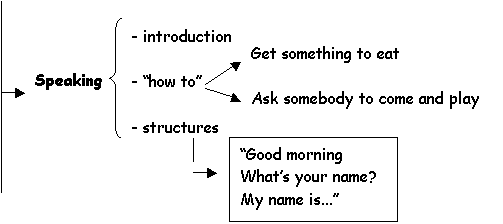
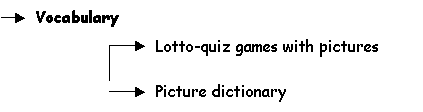
Towards READING and
WRITING
§
It
should be kept to a minimum at the beginning
§
Most
lexical items should be introduced in picture form
§
Children
should hear and say lexical items before learning to read and write them
An activity- THE BIRTHDAY PARTY
This
activity is divided into steps that can be developed during different
classes. Some of them can be omitted.
§
Step
1: Describing a picture with birthday objects and revision of vocabulary
§
Step
2: Colouring the picture- Asking about colours and quantity
§
Step
3: Interviewing their classmates- “how old are you?”
§
Step
4: Calendar- Asking about their birthday dates
§
Step
5: Days of the week- “what day is your birthday this year?
§
Steps
6, 7 y 8: - Asking (in their mother tongue) about traditional
ways
of celebrating birthdays
- Celebration at school: practising phrases for
offering, accepting and requesting
§
Step 9
(further step): - Discussing about the seasons (according to
the local climate)
- Introducing vocabulary dealing with weather
and clothes
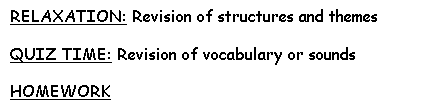
A MODEL LESSON
§
A
lesson of approximately 40 minutes should include moments of:
INTRODUCTION: Greeting
/ a song



SMALL TALK: Ask
questions about the class/ Hidding objects
§
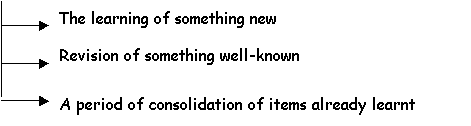
It
should involve:
Make
sure that what is once learnt is revised and reused in other contexts Try to
keep sentence patterns and vocabulary to a small number


-------------------------------------------------------------------------------------------
Lucas Tsolakian
Using video in the
primary classroom.
Bob Mardsen
3 main questions:
1) Why should we use it?
2) How should we use it?
3) What can be it used for?
1)
 Video presents language in context and can show the meaning of words. It can bring fun and added motivation to language learning.
 Sound Vision




Language
Music
Effects People /
Objects



In the Cartoon (Particularly Movement Colour Shape
 Strong and
Clear)
Strong and
Clear)
Simple
Language

 Content more memorable
More effectively learnt
2)
3 principles:
1) Show short extracts: 1-5 minutes (1 or 2 lessons)
2) Show the whole extracts first: children don’t respond well to stop –
start techniques.
3) View actively: Set a task.
3)
6 Areas:
a) Comprehension: Video improves children’s ability to understand
language and to understand the elements of the story.
Tasks:
·
Gist questions: Set one or two gist
questions before they watch.
·
Recognising emotions: Before they
watch, ask them to find out, for example: Who is angry?, Who is happy?, Who is
sad?.
·
Sentence re-ordering: They watch the
scene and have to the events in the right order.
·
Prediction: Ask children to predict
what is going to happen while the video is stopped.
b) Language development / revision:
·
Revision of the ways of expressing
likes and dislikes.
·
Revision of colours.
·
Revision of description of
characteristics (through comparatives).
c) Presentation (of new items of language)
d) Using video as a model
·
Repetition
·
Imitation – they actually enjoy trying
to sound like any character.
·
Chanting
·
Singing
·
Re-enactment
e) Getting them to talk: 2 techniques:
·
Sound only – ask children to describe
people
·
Silent viewing – ask children what is
happening or who the characters are.
f) Springboard for activities
·
Drawing
·
Writing
·
Role-play
·
Models
-------------------------------------------------------------------------------------------
Pamela Soilimano
Activity Based
Teaching: Approaches to Topic Centred Work
Manual skills 

 children´s
target
children´s
target

 Learning
cognitive skills language
Learning
cognitive skills language

 Enhance develop

 Children=irrepressible
Activities lively and enjoyable
Children=irrepressible
Activities lively and enjoyable
 Doers
Doers
Activity Based Learning

 Stimulates



 Play
Creativity Curiosity
Play
Creativity Curiosity

 Children=active symbol makers
create recreate children full of hyphoteses
Children=active symbol makers
create recreate children full of hyphoteses


Representations
of
experiment
Their experiences
 Scientific

 Involved in many
Creative
Involved in many
Creative
Activities Investigative


 Explore Children teacher helps
the children to
Explore Children teacher helps
the children to


 Structure their
Learning

 Topic of their interest Topic Centred Learning integrated lesson=
subjects are
Topic of their interest Topic Centred Learning integrated lesson=
subjects are
not
taught separately
provides

 a clear
context
creates a
genuine
a clear
context
creates a
genuine
 purpose for


makes the learning using language in the classroom

 learning more
meaningful
learning more
meaningful
language=passport to increase knowledge
-------------------------------------------------------------------------------------------
Jorgelina Guerrero and Elba Lopez
Carrizo
Classroom
Observation Tasks
Chapter
2: Language
2.1 THE TEACHER’S META -
LANGUAGE
BACKGROUND
THE
TEACHER’S META – LANGUAGE IS THE LANGUAGE THAT THE TEACHER USES TO ORGANIZE THE
CLASSROOM. IT INCLUDES TEACHER’ S EXPLANATIONS, RESPONSE TO QUESTIONS,
INSTRUCTIONS, GIVING OF PRAISE, CORRECTION, COLLECTION OF HOMEWORK, ETC.
META –
LANGUAGE IS AN IMPORTANT SOURCE OF LEARNING BECAUSE IT IS CONTEXTUALIZED,
PURPOSEFUL
AND COMMUNICATIVE AND THEREFORE A RICH SOURCE OF INPUT.
TASK
OBJECTIVE
TO COLLECT
SOME INSTANCES OF THE TEACHER’S CLASSROOM META – LANGUAGE IN ORDER TO CONSIDER
THE VALUE THAT THIS LANGUAGE HAS IN A LEARNING CONTEXT.
PROCEDURE
BEFORE
THE LESSON
ARRANGE TO
SEE A LESSON WITH A LOWER – LEVEL CLASS AND ONE IN WHICH THE TEACHER PLANS TO
PRESENT ‘NEW LANGUAGE’.
MAKE
YOURSELF FAMILIAR WITH THE CHART AND ITEMS YOU WILL BE LISTENING FOR.
DURING
THE LESSON
IT’ S
ADVISABLE TO USE A CHART TO HELP YOU MONITOR THE TEACHER’S CLASSROOM LANGUAGE.
WRITE DOWN
DIFFERENT CHUNKS OF THE TEACHER’S META – LANGUAGE, ANALYSING WHAT THE
COMMUNICATIVE PURPOSE IS, WHAT THE INMEDIATE CONTEXT IS, AND HOW THE SAME
MEANING CAN BE DELIVERED TO A NATIVE SPEAKER.
|
WHAT DOES
THE TEACHER SAY? |
WHAT IS
THE COMMUNICATIVE PURPOSE? |
WHAT IS
THE INMEDIATE CONTEXT? |
HOW MIGHT
THIS BE SAID TO A NATIVE SPEAKER? |
|
‘LOOK AT
THE MAP’ CAN YOU
SEE A BANK? |
GIVING
INSTRUCTIONS. CHECKING
COMPREHENSION. |
TEACHER
IS SETTING UP A TASK WITH A VISUAL AID. (MAP) |
‘CAN YOU
SEE WHERE THE BANK IS? (ON THE MAP) |
AFTER
THE LESSON
TAKING
INTO ACCOUNT THE CHUNKS OF TEACHER’S LANGUAGE THAT YOU SCRIPTED, CONSIDER IN
WHAT WAYS THE COMUNICATION WAS PURPOSEFUL AND IF THE PURPOSE WAS OVBIOUS TO THE
STUDENTS.
COMPARE
THE LEVEL OF THE META – LANGUAGE USED TO THE LEVEL OF ANY ‘FORMAL LANGUAGE
INPUT’ IN THE LESSON.
WILLIS
WRITES THAT ‘LANGUAGE IS MUCH BETTER LEARNT THROUGH REAL USE THAN THROUGH
PATTERNS AND DRILLS’.
SOMETIMES
TEACHER’S META- LANGUAGE MAY SERVE, OVER TIME, AS A COMMUNICATIVE DRILL, SO
THINK IF THERE WERE ANY CHUNKS OF TEACHER TALK THAT POTENTIALLY MIGHT BECOME
‘PATTERN DRILLS’.
CONSIDERING
THAT META – LANGUAGE IS A RICH SOURCE OF LANGUAGE DATA, STATE IF THROUGH
SIMPLIFICATION, LEARNERS ACCESS EASILY THE TARGET LANGUAGE OR NOT.
2.2 THE LANGUAGE OF QUESTIONS
BACKGROUND
TEACHERS
ASK A LOT OF QUESTIONS. ACCORDING TO SINCLAIR AND COULTHARD, QUESTIONS ARE THE
COMMONEST TYPES OF UTTERANCES IN THE DISCOURSE OF CLASSROOMS.
THEY HAVE
DIFFERENT PURPOSES LIKE SOCIALISING, CHECKING VOCABULARY AND LEARNING OR
SEEKING OPINION.
TEACHER’S
PLAN THEIR QUESTIONS IN CONNECTION TO THE LESSON’S CONTENT AND GIVE LESS
EMPHASIS ON CONSIDERING THE QUESTIONS IN TERMS OF THE COGNITIVE A LINGUISTIC
DEMANDS MADE ON THE LEARNER WHICH ARE RELATED TO DECODING THE QUESTION AND
ENCODING THE RESPONSE.
TASK
OBJECTIVE
TO COLLECT
SOME QUESTIONS AND QUESTION – ANSWER SETS FROM A LANGUAGE LESSON IN ORDER TO
CLASSIFY AND ANALYSE THEM.
PROCEDURE
BEFORE
THE LESSON
ARRANGE TO
OBSERVE A LESSON. READ RIGHT TROUGH THIS TASK.
DURING
THE LESSON
LISTEN TO
THE TEACHER’S QUESTIONS AND COLLECT ABOUT TWENTY OF THEM.
LISTEN FOR
SOME TEACHER QUESTION – STUDENT ANSWER ‘SETS’. A SET HERE IS THE EXCHANGE
BETWEEN TEACHER AND STUDENT, INITIATED BY THE TEACHER’S QUESTION. IT CAN BE
SIMPLE: TEACHER QUESTION + STUDENT ANSWER; OR MORE COMPLEX: TEACHER QUESTION +
TEACHER REFORMULATION + STUDENT RESPONSE + ANOTHER STUDENT RESPONSE.
TRY TO
RECORD FIVE OF THEM FROM ANYWHERE IN THE LESSON.
AFTER
THE LESSON
1-CONSIDER THE
QUESTIONS YOU HAVE COLLECTED FROM THE POINT OF VIEW OF THE RESPONSE.
2-CLASSIFY THE
QUESTIONS INTO CATEGORIES ON THE BASIS OF THE EXPECTED RESPONSE:
-YES/ NO
QUESTIONS.
-SHORT
ANSWERS/ RETRIEVAL-STYLE QUESTIONS,’ WHAT DID SHE SAY ABOUT THE FILM?’
-OPEN –
ENDED QUESTIONS ‘WHOM COULD HE HAVE TELEPHONED?’
-DISPLAY
QUESTIONS (QUESTIONS REQUESTING INFORMATION ALREADY KNOWN TO THE QUESTIONER)
‘WHAT COLOUR IS THIS PEN?’
-REFERENTIAL
QUESTIONS (QUESTIONS REQUESTING NEW INFORMATION) ‘WHAT DID YOU STUDY AT
UNIVERSITY?’
- NON –
RETRIEVAL, IMAGINATIVE QUESTIONS. QUESTIONS THAT DO NOT REQUIRE THE LEARNER TO
RETRIEVE GIVEN INFORMATION. THEY ASK THE LEARNER TO EXPRESS AN OPINION OR
JUDGEMENT. ‘WHAT DO YOU THINK THE WRITER WAS SUGGESTING BY MAKING THE CENTRAL
CHARACTER AN ANIMAL?’
3-WHAT PATTERN,
EMERGES FROM THE CLASSIFICATION OF THE QUESTIONS? WHICH FACTORS MIGHT HELP
ACCOUNT FOR THE TYPE OF LESSON IT WAS, THE STAGE OF THE LESSON FROM WHICH THE
QUESTION CAME, THE AGE OF THE STUDENT, ETC.?
4-CONSIDERING
DIFFICULTY FROM THE LEARNER’S POINT OF VIEW, MAKING THE QUESTIONS FROM EASY TO
DIFFICULT.
5-CONSIDER THE
QUESTION- AND – ANSWER SETS IN ORDER OF COMPLEXITY.
6-IS THERE ANY
CORRELATION BETWEEN THE TYPE OF QUESTION AND THE COMPLEXITY OF RESPONSE
ELICITED?
2.3
THE LANGUAGE OF FEEDBACK TO ERROR
BACKGROUND
THIS POINT REFERS TO TEACHER’S RESPONSE TO ERROR. THE
VALUE OF POSITIVE FEEDBACK AND THE DIS- INCENTIVE THAT NEGATIVE REINFORCEMENT
CAN PRODUCE. THE CONTENT OF THE TEACHER’S RESPONSE TO THE LEARNER’S PRODUCTION
HAS AN IMPORTANT INFLUENCE ON HE LEARNING PROCESS.
TASK OBJECTIVE
RECORD DATA OF A NUMBER OF STUDENT – TEACHER
INTERACTIONS, WITH FOUR UTTERANCE COMPONENTS: TEACHER QUESTION + STUDENT
RESPONSE + TEACHER FEEDBACK + SUDENT RESPONSE TO FEEDBACK.
PROCEDURE
BEFORE THE LESSON
ARRANGE TO OBSERVE A LESSON.
DURING THE LESSON
1-COLLECT SOME SAMPLES WHICH INCLUDE LEARNER ERROR AND
TEACH FEEDBACK TO ERROR.
2-WRITE DOWN ANY SUPPLEMENTARY SUPPORT ADDED TO THE
INFORMATION. FOR EXAMPLE: USE OF THE BOARD, VISUAL GESTURE.
3-CONSIDER WHETHER THE FEEDBACK WAS ENCOURAGING (+) OR
DISCOURAGING (-)
AFTER THE LESSON
1-ACCORDING TO BROWN A GENUINE RESPONSE FROM THE
TEACHER PROVIDES SOME INDICATION TO LEARNERS OF THE EFFECTIVENESS OF THE
UTTERANCES.
2-THE INFORMATION COMPONENT OF TEACHER FEEDBACK IS
VERY IMPORTANT TO THE LEARNER’S LEARNING PROCESS. ACCORDING TO ZAMEL, FEEDBACK
IS MOST EFFECTIVE WHEN IT: - POINTS OUT CRITICAL FEATURES OF THE LANGUAGE.
-GIVES INFORMATION THAT ALLOWS THE STUDENT TO DISCOVER
BY ONESELF RULES AND PRICIPLES OF LANGUAGE.
-REDUCES AMBIGUITY OF CHOICE FOR THE LEARNER. TAKING
INTO ACCOUNT THE PREVIOUS POINTS CONSIDERED: - IF THE TEACHER IS PROVIDING IN
HIS/ HER FEEDBACK INFORMATION THAT HIGHLIGHTS WHEN THE ERROR IS WHAT THE
CHOICES ARE AND INFORMATION THAT HELPS THE LEARNER ADJUST THEIR CURRENT
UNDERSTANDING.
3-ESTABLISH IF THE TEACHER HAS USED ELEMENTS LIKE
VISUALS OR GESTURES TO SUPPORT INFORMATION.
4-ACCORDING TO SMITH (1971) ‘THE LANGUAGE LEARNER IS
AN ACTIVE AND SELECTIVE INFORMATION GATHERER WHO ACQUIRES AND INTERPRETS NEW
INFORMATION ON THE BASIS OF RULES ALREADY STORED IN THE BRAIN’. SO STUDENTS
HAVE THEIR OWN UNDERSTANDING AT HOW THE LANGUAGE IS ORGANIZED. EACH PRODUCTION
IS A TESTING OF INTERNAL HYPOTHESIS. FEEDBACK FROM THE TEACHER MAY RESULT IN A
SLIGHT ADJUSTMENT OF THE ORIGINAL HYPOTHESIS.
2.4 LANGUAGE ECHOES
BACKGROUND
ECHOES ARE
THE MOST DISTINCTIVE FEATURE OF THE LANGUAGE LEARNING CLASSROOM. THEY DO NOT
PRODUCE AN EXCHANGE, THEY ARE DEAD ENDS.
TASK
OBJECTIVE
TO RAISE
AWARENESS OF THE ISSUE O F TEACHER ACHOES IN CLASSROOM.
PROCEDURE
BEFORE
THE LESSON
ARRANGE TO
OBSERVE A LESSON AND MAKE YOURSELF FAMILIAR WITH THE WAY OF ECHOING WHEN IT IS
DEFINED.
DURING
THE LESSON
WRITE
SAMPLE OF TEACHER’ S ECHOES INCLUDING ENVINMENT AND SOME UTTERANCES LEADING UP
TO THE TEACHER ECHO.
SELECT A
PORTION OF TIME OF THE LESSON INVOLVING TEACHER – STUDENT INTERACTION AND COUNT
THE NUMBER OF ECHOES THAT OCCUR IN THIS TIME.
AFTER
THE LESSON
1-COUNT
HOW MANY ECHOES YOU HAVE COLLECTED AND SAY IF THE TEACHER BEHAVIUOR WAS
CONSCIOUS OR SUBCONSCIOUS.
2-ESTABLISH
THE EFFECT OF THE TEACHER’S ECHO ON: a- THE LEARNER. b- PATTERNS OF CLASSROOM
INTERACTION. C- ON THE LEARNER’S PERCEPTION OF THE TEACHER’ S CORRECTIVE ROLE. D-
ON THE LEARNER’S WILLIGNESS TO TAKE RISKS.
3-CONSIDER
IF TEACHER’S ECHOES ARE DEAD ENDS.
4-CONSIDERING
THE KIND OF INFORMATION THAT LEARNERS NEED IN FEEDBACK FROM THE TEACHER, SAY IF
WHAT THE LEARNERS HAVE RECEIVED IS USEFUL.
5-SOME
POINTS IN FAVOUR OF ECHOING ARE THE FOLLOWING: - IT PROVIDES LEARNERS WITH THE
REPETITION NEEDED FOR THE REINFORCEMENT OF LANGUAGE.
- IT HELPS TO OVERCOME THE PROBLEM OF STUDENTS WHO
SPEAK VERY QUIETLY.
- IT HELPS TO OVERCOME THE PROBLEM OF
PRONUNCIATION.
- IT CAN BE USED AS A STRATEGY TO PROVIDE MODEL’S
OF CORRECTNESS IN THE EVENT ERROR.
6- ONE COMMON CRITICISM OF ECHOING IS THAT AN
ECHO IS ‘NOT A MATERIAL RESPONSE’, THAT MEANS THAT IT IS UNLIKELY TO OCCUR IN
CONTEXT OUTSIDE OF THE CASSROOM.
- LANGUAGE AS THE NEGOTIATION OF MEANING
BACKGROUND
DRING THE LAST DECAADE OF LANGUAGE LEARNING
RESEARCH, INTERLANGUAGES STUDIES HAVE REVEALED THAT THE LANGUAGE USED IN
CLASSROOMS, IN THE PROCESSES OF ENGAGING WITH MATERIALS, IS A SIGNIFICANT
FACTOR IN LANGUAGE LEARNING.
THIS TERM CONVERSATIONAL MODIFICATION
USED BY DOUGHTY AND PICA, REFERS TO THE MEANS BY WHICH LEARNERS NEGOTIATE THE
MEANING OF INPUT, TO MAKE IT COMPREHENSIBLE.
THIS TAKES PLACE VIA A NUMBER OF PROCEDURES.
TASK OBJECTIVE
TO SENSITISE YOU TO THE LANGUAGE OF
CONVERSATIONAL MODIFICATION AND TO THE FACTOR THAT PROMOTES IT.
PROCEDURE
BEFORE THE LESSON
1-ARRANGE TO OBSERVE A LESSON IN WHICH YOU
MIGHT EXPECT TO BE A GOOD DEAL OF CONVERSATIONAL MODIFICATION. FOR EXAMPLE: -
AN OBVIOUS DEGREE OF CHALLENGE BUILT INTO THE LESSON.
- A FOCUS ON MEANING RATHER THAN CORRECT FORM.
- A TASK IN WHICH LEARNERS ENGAGE IN AN INFORMATION
– GAP EXERCISE.
2-MAKE YOURSELF FAMILIAR WITH THE FOLLOWING
CATEGORIES OF LANGUAGE OPERATION THROUGH WHICH MEANING MAY BE NEGOTIATED.
- A CONFIRMATION CHECK, WHERE THE LISTENER BELIEVES
THE OTHER PEOPLE HAVE UNDERSTOOD
- A CLARIFICATION REQUEST, WHEN ONE INTERLOCUTOR
DOES NOT ENTIRELY COMPREHEND THE MEANING AND ASKS FOR CLARIFICATION.
- A REPETITION, WHERE THE SPEAKER REPEATS THEIR OWN
UTTERANCE IN ORDER TO REPAIR A COMMUNICATION BREAKDOWN.
DURING THE LESSON
USE A CHAT AND TRY TO RECORD SOME INSTANTES OF
LANGUAGE OPERATIONS USED BY LEARNERS, IN CONTACT WITH EACH OTHER OR WITH THE
TEACHER.
THIS MAY INVOLVE USING A TAPE RECORDER. IN EACH
CASE RECORD UTTERANCE, RESPONSE AND THE RETURN.
AFTER THE LESSON
- CLASSIFY THE DATA COLLECTED ACCORDING TO WHAT
TYPE OF LANGUAGE OPERATION WAS USED. COMMENT ON THE OUTCOME.
- WHAT FACTORS ARE CONDUCTIVE TO CREATING A
LEARNING CONTEXT IN WHICH CONVERSATIONAL MODIFICATION HAPPENS.
- LEARNING THAT REQUIRES STUDENTS IS AN ASSET OR AN
UNNECESSARY CHALLENGE FOR LEARNERS.
- ACCORDING TO BROWN, TEACHERS SHOULD AIM TOWARDS
DEVELOPING THE SKILL THAT ENCOURAGES LEARNERS.
- THE TYPE OF TEACHING THAT ENCOURAGES
CONVERSATIONAL MODIFICATION IS VERY DIFFERENT FROM THE TYPE OF TEACHING
WHERE ERROR IS MINIMISED.
-------------------------------------------------------------------------------------------