Lic.
Efraín Davis M.A.
Master in Arts en Lingüística Aplicada . University College of North
Wales- Reino Unido de Gran Bretaña.
Licenciado
en Administración de la Educación Superior. Universidad Nacional de la
Matanza. Licenciado en Gestión Educativa. Universidad CAECE.
Profesor Superior de Inglés. Universidad Nacional de Catamarca. Profesor
de Inglés por el Instituto Superior del Profesorado J.V.González.
Profesor
Titular Ordinario. Universidad Tecnológica Nacional - Facultad Regional
Haedo.
Jefe de Cátedra - Inglés Técnico II, Departamento de Ingeniería
Universidad Nacional de La Matanza.
Profesor Titular de la Cátedra de Inglés e Inglés Técnico II
del Departamento de Ingeniería e Investigaciones Tecnológicas, U.N. de
La Matanza.Profesor titular de Lingüística Aplicada; Lingüística Contemporánea
y su Enseñanza; Lengua Especializada. Universidad .CAECE. Tiene
a su cargo Cursos de Pos-grado para graduados en la Universidad
Nacional de San Luís y la Universidad Nacional de La Pampa. Coordinador
del Centro de Lenguas de la Universidad Nacional de Quilmes.
Investigador
Categorizado (II).
Director
y evaluador de proyectos de investigación y artìculos para publicación.
Director
de tesistas de maestría y licenciatura.
Consultor
curricular, autor, conferencista a nivel nacional e internacional.
ELT
Today: Current Perspectives and Future Directions.
This
closing plenary is intended to review a number of topics that have
generally been dealt with separately and which,in our opinion ,cannot be
considered in isolation .
As teachers, we should claim the right to have access to the whole
picture of our profession , not just parts of it in an ever-changing scenery
to which we may just
feel we do not belong.
What we mean is that in order to seriously deal with the current
perspectives in our profession, and before we get excited and carried away
by the future driven enterprise which that may entail,we should
stop to reflect upon our teaching reality-reflection being one of
the current issues
nowadays.However,we have been driven into reflective practice in such a
way that we feel we have lost a sense of balance ,and perhaps even worse,
that we may also have lost sight of reality
in the process.
No doubt reflection is necessary,but if it
is only a question of fashion,it will be like looking at your own
reflection in the mirror rather than perceiving what may be hiding behind
it, for better or worse.
In
short,this is a daring invitation to break through the mirror and explore
the big picture with all its dangers ,its sharp edges ,and its piercing
thorns.
"Fear no more the heat o´ the sun
Nor the furious winter rages.”
run the famous verses ; “take the
risk!” is our challenge .
Dr.
Kenton Sutherland Ph.D.
Ph.D.
((ABD) in Foreign and Second Language Education, Stanford University.
M. A. In Applied
Linguistics,University of California, Los Angeles.
B. A. in Latin American Studies University of the Americas, Mexico City.
Associate in Arts Degree, Compton College, Compton, California.
Specialist
in ESL/EFL/ESP instruction, program administration, corporate training, teacher training, curriculum, and
materials development. Consultant
to foreign governments, Binational Centers,
and Universities.
Teacher trainer for Peace Corps, National NDEA Institutes,
University of California, USIA, and USAID/AMIDEAST.
Consultant for the Center for Applied Linguistics.
Textbook editor/writer and audio program producer. Frequent
presenter at professional conferences.
Charter Member of TESOL (1966); Founding Member of CATESOL (1969) and President
(1978-79) Publications in
national and international journals:, including TESOL Quarterly,
CATESOL Journal, MEXTESOL
Journal, and Cross Currents,
Some
solicited and unsolicited advice for the ELT professional
In searching for new approaches and techniques, ELT
professionals can be dazzled by the latest seductive “designer method”
to come along. Professor Sutherland claims that we do not need
such new methods, but we do need to agree on certain
well-established principles of second language acquisition. In this
presentation, he will take us through twelve affective, cognitive,
and linguistic principles that we can use as guidelines for a
reasoned approach to our teaching
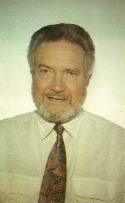
Lic. Ana Maria Rozzi de Bergel
English Teacher, Escuela Normal Nº 1 de Profesoras, Rosario. Licenciada en Gestión Educativa, Universidad CAECE. Coordinator and curriculum designer of the Licenciatura en Enseñanza del Idioma Inglés, Universidad CAECE.
Coordinator of the English Department at CENTUM, a representative of Trintiy College London’s teacher-training courses. Former editor of “The ELT Forum”, Idiomanía’s supplement for English teachers and a regular contributor to The Buenos Aires Herald Education Supplement. A trained actress and director, author of the first Applied Drama syllabus for teacher-training.
Textbooks
and Learning Hypotheses: Making the Match.
Teaching materials are
usually designed according to the tenets of state-of-the-art approaches
and methods and using the most modern technology available to the
designer. Designs which are methodological impeccable and technically
flawless may, however, run contrary to some adolescent or adult
learners’ learning hypotheses and lead them into errors, mistaken
conclusions, loss of motivation and even frustration. On the other hand,
materials which match these hypotheses reduce anxiety, favour language
learning and enhance motivation. A better understanding of learning
hypotheses may help teachers and designers produce more effective
materials.
This plenary explores
the results of more than twenty years’ research into the correspondence
between learning hypotheses and materials design and attempts to describe
some features of textbooks and materials which may best suit different
types of adolescent or adult learners and those which should be
highlighted in materials for children so that they may become better
language learners.
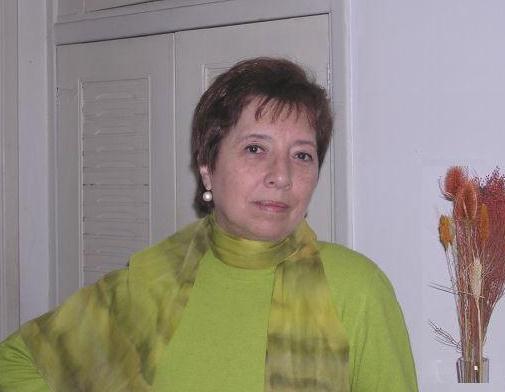
Lic. Omar Villarreal
Profesor de Inglés e Inglés Técnico – Instituto Nacional Superior
del Profesorado Técnico. Licenciado en Ciencias de la Educación (UCALP)
Licenciado en Tecnología Educativa (FRA-UTN). Post-graduate
studies in Educational Research at Universidad Nacional de Córdoba
and Applied Linguistics at Instituto Nacional Superior del Profesorado en
Lenguas Vivas.
University Chair in the Area of Applied Linguistics at Universidad Tecnológica
Nacional and Lecturer in Language I and IV at ISFD Nro 41.
Lecturer in Didactics of
ESP at Licenciatura en Inglés Universidad Católica de La Plata. Former
Lecturer in Sociology at Licenciatura en Lengua Inglesa -Facultad Regional
Villa María, Córdoba.
Teacher–trainer
for Red Federal de Formación Docente Continua, Centro de Pedagogías de
Anticipación del Gobierno de la Ciudad de Buenos Aires and the Ministry
of Education of Provincia de Buenos Aires.
Former Head of the School of English of Universidad Austral and
Principal of Instituto Superior del Profesorado Modelo de Banfield.
He
has lectured extensively in all Argentinian provinces as well as in Chile,
Paraguay, Uruguay and Perú. He is the author and co-author of more than
20 textbooks, among them: “Polimodal English”, “Resource Files”,
“Grammar Explorer” and “Top Teens” published by Macmillan.
A
Chicken without bones or the use of magic in ELT.
We
all want our students to communicate. We all want our students to be
flexible and fluent in their actual “use”
of the language but we often shy away from grammar, or we believe
in the magic of “grammar boxes” and “grammar summaries”
strategically placed at the end of the book. After all, we
have been told once and again that “while we focus on communication,
grammar will take care of itself”. But will it?
If it won´t, how much grammar should we teach and how? Should we
start writing grammar with a capital “G” again?
Prof. Fernando Armesto
Lecturer
at Instituto Nacional Superior del Profesorado Técnico de la Universidad
Tecnológica Nacional in the Chairs of "Didactics for EGB 1 and
2" and "Practicum" . Head of English- Primary and
Secondary- at Colegio Belgrano Uno.
Former Lecturer in English Language at Universidad Austral and Universidad
del Museo Social Argentino and Head of English at Instituto de Educación
Integral .
Since
1996, he has specialized in E.S.P., working in the fields of Tourism,
Hotel Catering and Management and Journalism. He is the co- author of the
resource book "Tourism" published by Macmillan.
He
has been engaged in several Drama Clubs and Societies and as a teacher he
has worked with Drama with children, adolescents and adults. He has also
participated as an actor and assistant director in various plays with the
Buenos Aires Players and the Suburban Players.
Theatre
Games in the Classroom!
Participants
will be able to discover and play an array of games that combine theatre,
drama and fun!. A brief theoretical background will be given as the
starting point to a trip along amazing and entertaining activities
professional actors use in their training. See how these activities can
make your classes become enjoyable and profitable sources of language
learning experiences.
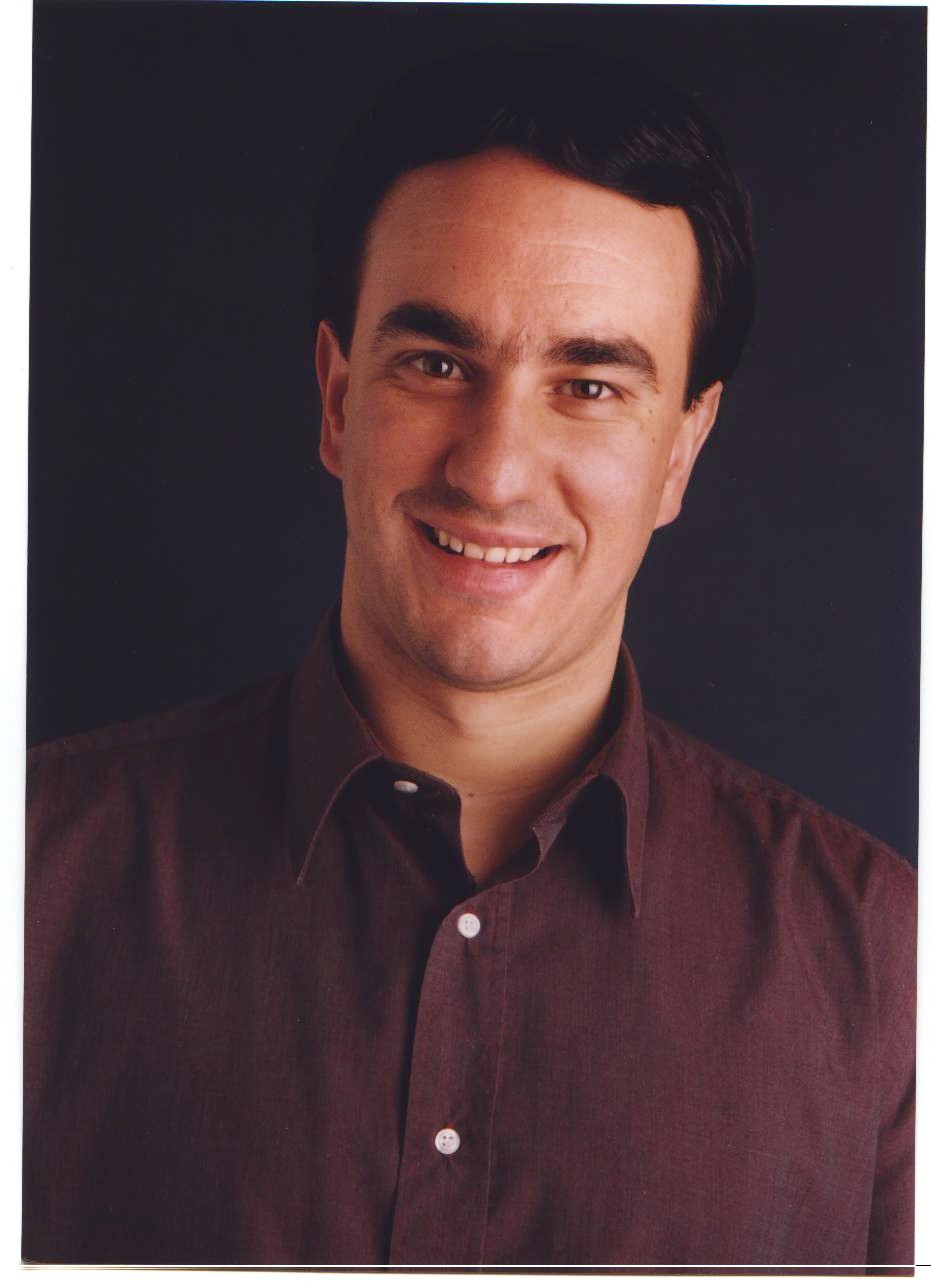
Prof.
Judy Kievsky M.A.
Judy
Kievsky holds an
MA. in Education from Boston University and a
degree
as English-Spanish translator from INPLV J.R. Fernandez.. She has taught
English in Haifa, Jerusalem , Boston and in Buenos Aires.
As a SEAL member , Judy has a strong committment to Brain-based teaching
and Self-esteem,attending International Conferences in Great Britain
since1995. In her workshops, she tries to blend a holistic approach to
teaching with brain friendly practices. Judy has presented workshops in
Panama (International Reading Association
2004), Chile (AASSSA) and in different provinces in Argentina.
Judy is also a member of IRA (International Reading
Association) and NCTE (National Council of Teachers of English,
USA).
Prof. Claudia Rey
Claudia
is a graduate of INSPLV Juan Ramon Fernandez, with vast experience in the
teaching of English as a Foreign, Second and First Language. Since 1989
she has been actively involved in professional development in the areas of
Reading, Children’s Literature, Mathematics Instruction and Brain-based
Teaching and has presented lectures and workshops in Argentina and abroad.
Her experience as an international speaker includes sessions on "Multiple
Intelligences and Proportional Reasoning" (National Council of
Teachers of Mathematics Annual Meeting, San Antonio, Texas, US, 2003),
"Teaching Reading Strategies with Picture Books" (International
Symposium, Homerton College, Cambridge, UK, 2000) and "Brainwashing,
an Introduction to Brain-based Learning" (Association of American
Schools in South America Annual Conference, Santiago, Chile, 1999).
She
is a former lecturer in Children’s Literature at IES en Lenguas Vivas,
J. R. Fernandez and currently serves as Middle School Mathematics Head of
Department and English and Social Studies teacher at Asociacion Escuelas
Lincoln, the American International School in Buenos Aires.
Brainwashing
Today, most educators around the world agree that our brain is the key to enhance learning and teaching. In this
plenary, we will revise the principles of Brain- based teaching &
learning, Multiple Inteligences and Learning Styles and will provide practical
ideas and instructional strategies for educators at all levels.
The topics of the plenary will include the interconnection between body and mind, verbal/non-verbal
communication, affective/effective education, Caine & Caine principles of Brain Based Education, assessment and the impact of environments on learning.
Prof. Claudia Rey.