| QUINTO
ENCUENTRO DE PROFESORES DE INGLÉS DEL CONURBANO BONAERENSE
ADROGUÉ
- NOVEMBER 2006
|
 |
|||||
|
Schedule
|
||||||
| "How to deal with your students´ language mistakes and errors" | ||||||
| In the world of language teaching, the term error has traditionally been used to refer to an utterance that does not comply with the standards of correctness and/or appropriacy of the language being taught. However, the professional teacher often faces some degree of confusion when it comes to handling errors. This situation may indeed be literature-induced, as the latter has generally seen an error either as a deviant element that needs to be eradicated altogether, or as a developmental episode that does not merit the teacher's undivided attention. This practical session is aimed (a) to delve into the nature and scope of errors, mistakes, slips and faux pas, (b) to describe and explain common errors and (c) to suggest ways to include the practice of error analysis in a teaching agenda. | ||||||
 |
||||||
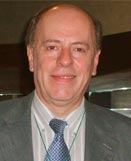
Magíster
Juan A. Ferretti |
||||||
| Juan A. Ferretti holds an M.A. in TESOL and Applied Linguistics from University of Leicester, UK. He teaches Academic Writing and Critical Discourse Analysis at Licenciatura en Lengua Inglesa from Universidad Tecnológica Nacional and 20th Century Culture at Universidad Tecnológica Nacional (Teacher Education College), Language III and Language IV at CONSUDEC Teacher Education College (Buenos Aires) and Academic Writing at Instituto Superior del Profesorado "Joaquín V. González." His main interests are Academic Writing, the Language-Culture Interface and Critical Discourse Analysis | ||||||
| Wednesday 1st November 20:30 - 21:30 | ||||||
Testing
Listening Comprehension |
||||||
| Testing listening involves a variety of skills. At the lowest level, it involves discrimination among sounds, discrimination among intonation and stress patterns, and comprehension of short and long listening texts. While the first two are part of listening, they are, of course, not sufficient. On the other hand, when testees' listening proficiency gets more advanced, testing listening becomes more complicated. It becomes more difficult to separate listening from other skills, and combining skills can put great demands on the testee. The workshop participants will be encouraged to reflect upon these issues and draw conclusions. | ||||||
 |
||||||
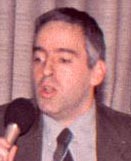
Prof. Alfredo Bilopolsky |
||||||
| Alfredo Bilopolsky is Teacher of English and Technical English from Instituto Nacional Superior del Profesorado Técnico de la Universidad Tecnológica Nacional.. English Coordinator at Escuela De Hilel . He has taught General English to young children, teenagers and adults at prestigious ELS´s in the city of Buenos Aires. He is an Assistant Lecturer in Didactics II at Universidad Tecnológica Nacional | ||||||
Thursday
2nd November 19:00 - 20:15 |
||||||
| Thinking Lexically, Teaching Lexically: Focusing on the " How to". | ||||||
| Over the years the methods of teaching and learning languages have changed considerably. However, the content and the way in which language is presented and sometimes explained to students may have not. The tendency to teach grammar and words separately is still with us. The purpose of the present presentation is to reflect on the way we think about language and the importance of noticing (a key strategy in the Lexical approach) to help us put new theoretical insights to practical use directly into the classroom. When teaching lexically grammar and words interact. We are going to see this interaction in a different full light, suggest ways to develop the teaching of language and skills, deal with speaking in class, see some sample exercise and activity types and discuss core ideas such as collocation, fixed expressions and the role of the learner’s mother tongue. | ||||||
 |
||||||
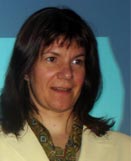
| Dra. Martha Cecilia Ortigueira (ABD) | ||||||
| Martha Ortigueira is a Profesora en Inglés - Facultad de Filosofía y Letras de la Pontificia Universidad Católica Argentina. She is a candidate to the Doctorate in Modern Languages at Universidad del Salvador. She is a Lecturer at Instituto Nacional Superior del Profesorado Técnico de la Universidad Tecnológica Nacional in the Chairs of Theories of Learning and Residencia Pedagógica and Academic Language I and II at Licenciatura en Lengua inglesa - Universidad Tecnológica Nacional. She also teaches Language II at Instituto del Profesorado del Consudec. Head of English- Primary School at Instituto Santa María del Rosario and director of her own school of English in Barracas. Former teacher of English at Centro Cultural and Centro de Graduados en Lenguas Vivas de la Universidad Católica Argentina. Ms. Ortigueira is a Practitioner in Neuro Linguistic Programming. | ||||||
Thursday
2nd November 20:30 - 21:30 |
||||||
| Failure and Success in Language Learning and how they are related to the unconscious messages we send to our students | ||||||
| Most teachers mainly concentrate on what they have to "say", on what they need to "teach", on whether the students handed in the required homework. But this is only part of the job. There is a fine veil that hides a bigger and more profound world: the world of the unconscious. In this world live all the other elements that will turn what we say, teach and do into a success or a failure, because in every single act we perform there are imperceptible messages that go deep into the minds and souls of our students, determining the result . Our deeper thoughts and beliefs are put into motion and speak louder than what we say. Join us, and let's go hand in hand unveiling some of those imperceptible things, because "every breath you take, every move you make, they'll be watching you!" | ||||||
 |
||||||
Prof.
Diana Porto |
||||||
| Diana has been teaching English for 20 years now. She is a Profesora de Inglés y Literatura, Universidad Nacional de La Plata and is currently taking her Master in Teaching English as a Foreign Language at the University of Vigo. She has been actively involved in researching on and applying techniques used in methods derived from the Humanistic Approach. She is teaching English Language II at Universidad Nacional de La Plata, Written Expression III at the Instituto Terrero in La Plata and several courses at the Instituto Cultural Argentino Británico. She is a member of the Society for Effective Affective Learning and of the American Association of Professional Hypnotherapists. She has lectured in Argentina dn in Italy. | ||||||
| Friday 3rd November 19:00 - 20:15 | ||||||
| How to get a firm grip on new words and expressions in American English today | ||||||
 |
||||||
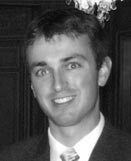
Bryan
Muir B.A. |
||||||
| Bryan was born in Williamstown, Massachusetts, USA.He is a member of the U.S. Fulbright Program, investigating sustainable fundraising strategies in Argentina's social sector. Prior to arriving in Buenos Aires, Bryan graduated from General Electric's Financial Management Program, where he held various finance positions in Connecticut, Minnesota, and New York. Bryan holds a BA in Economics from Dartmouth College, Hanover, New Hampshire, USA | ||||||
FRIDAY
3rd NOVEMBER 20:30 - 21:30 |
||||||
| Bryan Muir and a panel with Martin Villarreal, Rodrigo Insaurralde, Mariano Nastri, ans Walter Sosa. | ||||||